
Autonomous intralogistics for Swiss manufacturing facilities
INDUROS automates internal transport within existing factories. JKS handles the analysis, integration, and rollout to ensure that robotics doesn’t become a mere showcase, but rather a smoothly functioning component of the production process.
Built for continuous use in intralogistics
INDUROS is designed for robust, connected, and continuously available material flows in industrial settings.
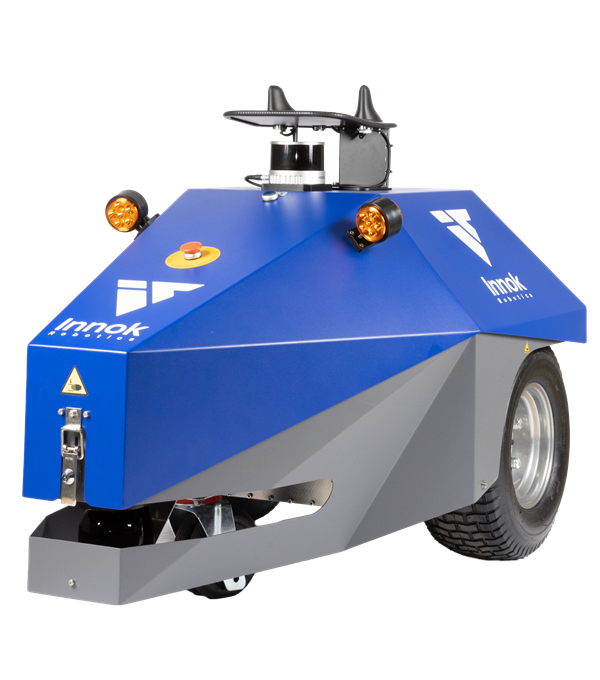
Most plants don't lose power at the machinery. They lose it between the machines.
Supply stations are waiting for materials because forklifts and staff have other priorities.
Empty trips, search times, and safety issues arise between warehouses, shelves, and production lines.
Many robotics projects fail not because of technical issues, but because of a lack of seamless integration.
That is precisely why JKS bridges the gap between strategy and implementation: We evaluate the business case, structure the rollout, and bring the vehicles into productive operation.
Where the solution takes the pressure off in practice
The strongest use cases are found in situations where transportation is repetitive, prone to disruptions, or labor-intensive.
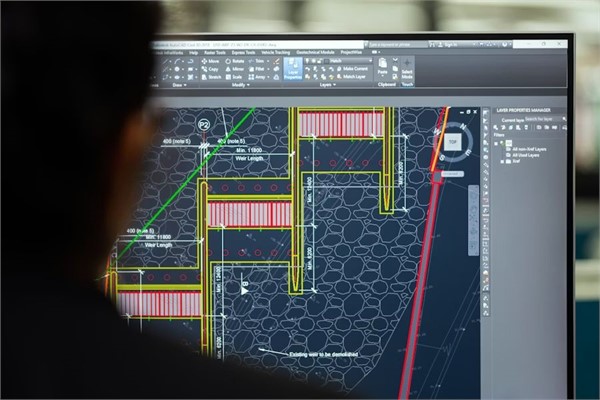
Automatically fill in lines
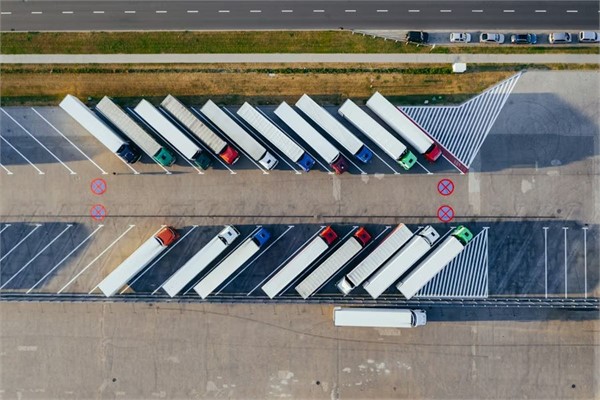
Connect between halls
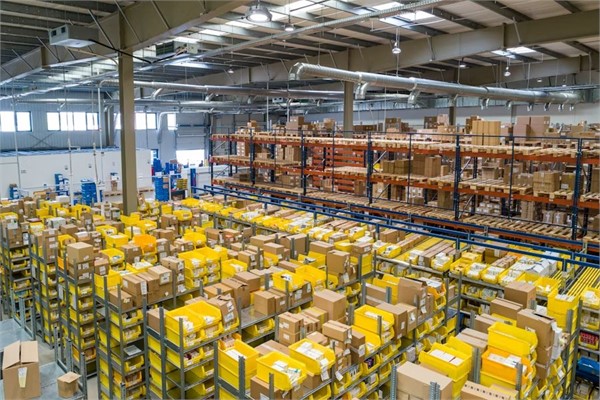
Easily swap out top modules
Integration instead of isolated robotics demonstrations
Three models. One approach. Many real-world factory scenarios.
The vehicles differ in towing capacity and geometry, but all follow the same robust integration logic.
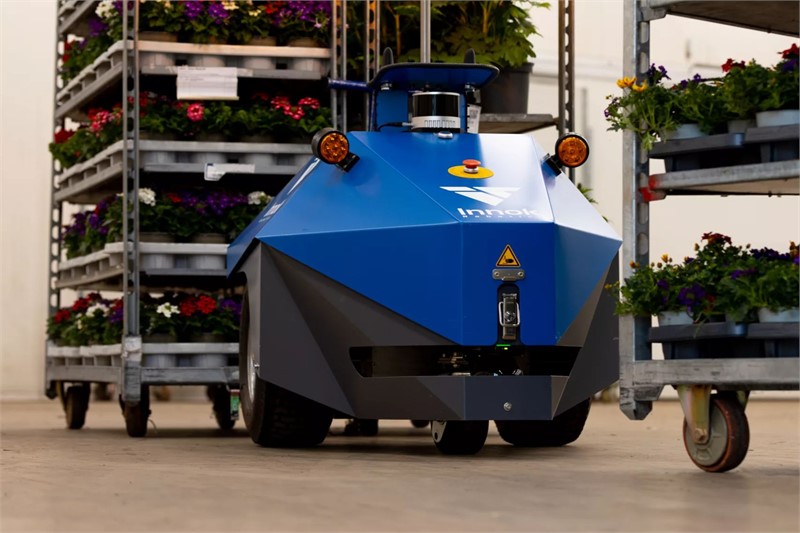
For assembly line operations, small load carriers, and tight warehouse layouts.
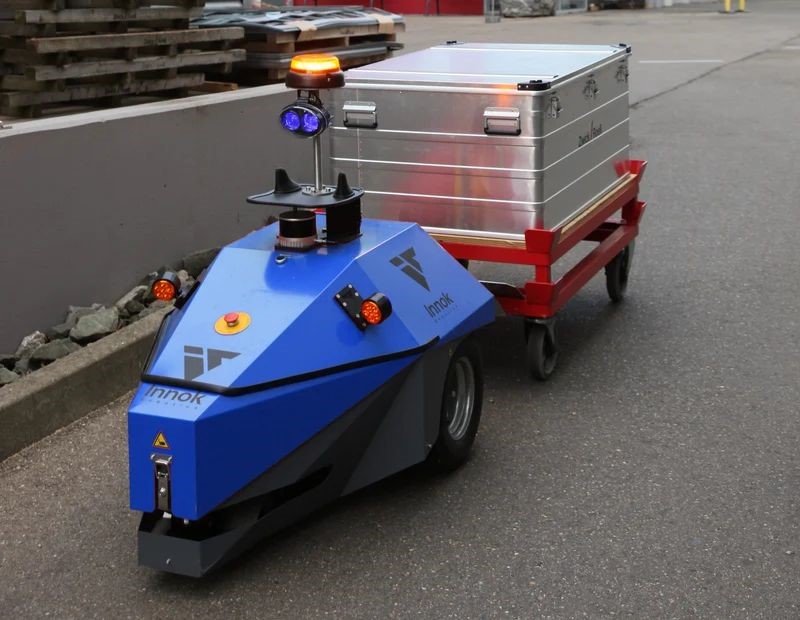
For material flows that require stability, reach, and flexibility all at once.
For performance-driven logistics that demands both power and speed.
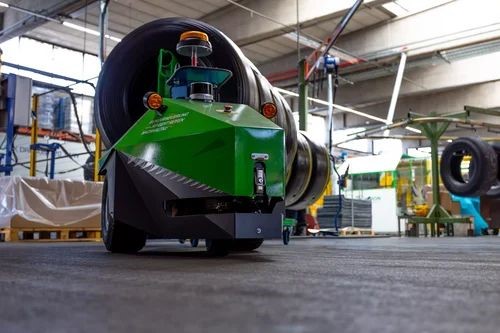
When towing capacity, durability, and a continuous flow of material are integral to the core process.
This is how a good use case becomes a successful rollout.
Analysis
Transport routes, schedules, interfaces, and safety requirements are clearly documented.
Layout & Integration
JKS plans the stations, processes, charging concept, and technical integration into the facility.
Pilot
An initial productive workflow demonstrates its benefits, stability, and organizational fit.
Scaling
The solution will then be gradually expanded to include additional routes, terminals, and vehicles.
Here’s what you should know about INDUROS.
Here you will find the most important answers regarding the use, safety, and cost-effectiveness of INDUROS.
Yes, that’s exactly what the platform excels at.
The navigation system doesn’t require magnetic strips or fixed floor markings. What’s crucial is the accurate mapping of traffic rules, handoff points, and safety zones.
Innok provides the vehicle platform.
In Switzerland, JKS is responsible for the use case, technical integration, interfaces, commissioning, and implementation in actual factory operations.
That depends on transport frequency, process requirements, and staffing. That is precisely why we don’t start with a piece of equipment, but rather with a feasibility study of the specific workflow.
An AGV follows fixed guides such as magnetic strips or floor markings. An AMR navigates freely and autonomously. INDUROS combines this flexibility with industrial durability, allowing routes to be adjusted more quickly and eliminating the need for complex floor infrastructure.
The vehicles are designed for industrial use and operate using safety laser scanners, safety zones, and predefined responses to people or obstacles. What matters most is not just the vehicle itself, but also the proper safety design within the specific plant layout.
Depending on the model and application scenario, the operating time typically corresponds to a productive shift operation. The vehicles automatically navigate to charging stations as needed, so that with the right charging strategy, virtually continuous 24/7 operation is possible.
Yes. The larger platforms, in particular, are designed for rugged industrial environments and can handle transitions between indoor and outdoor areas. This is especially relevant for facilities with multiple buildings, outdoor logistics, or supply operations that span the boundaries of buildings.
The platform supports various configurations, such as lifting platforms, conveyors, shelving or cart solutions, as well as custom top modules. This allows the same vehicle type to be used for different material flows without having to implement a completely new system logic each time.
An initial pilot can often become operational in a short period of time.
However, how quickly this actually happens depends primarily on interfaces, handoff points, safety approvals, and the desired scope of the rollout. This is precisely what JKS clarifies in the preliminary analysis.
Have the use case evaluated instead of continuing to theorize.
If you have internal shipments that regularly tie up capacity or slow down the production line, it’s worth taking a structured look at your material flow.